What Is Polymer Compounding?
Polymer compounding is the process of mixing, dispersing, and homogenizing a base polymer with additives, fillers, reinforcing materials, colorants, or other polymers to produce a compound with specific properties. The process is typically carried out in the molten state so that the different components can be uniformly distributed throughout the polymer matrix.

Why it Matter?
A single base resin often cannot meet all the requirements of a specific application. Properties such as strength, stiffness, toughness, flame retardancy, weather resistance, processability, or appearance may need to be improved. Through formulation design and melt compounding, manufacturers can modify existing properties or introduce new functions.
In this sense, polymer compounding serves as an important bridge between base resins and application-ready materials. Common polymers such as PP, PE, PA, PC, and ABS can be compounded into functional materials for automotive, electrical and electronics, construction, packaging, and many other industries.
For example:
- Automotive:Reinforcement, impact modification, and lightweight formulations can improve component performance while reducing weight.
- Transportation and aerospace-related applications: Carbon fiber and other reinforcements can improve the specific strength and stiffness of polymer composites.
- Electrical and electronics:Flame-retardant, insulating, conductive, or antistatic modification can meet different electrical performance requirements.
- Medical applications: Polymer compounding can help tailor materials for chemical resistance, sterilization requirements, and processing performance.
- Construction:Compounding can improve weather resistance, durability, flame retardancy, and other long-term performance characteristics.
What Goes Into a Polymer Compound?
A polymer compounding formulation varies according to the required properties, but it typically consists of base polymers, additives, fillers and reinforcements, and colorants.
Base Polymers
The base polymer forms the main matrix of the compound and largely determines its fundamental processing characteristics and properties. Common resins include PE, PP, PVC, PS, ABS, PA, PC, PBT, and TPU.
Depending on the performance requirements, a single resin may be used, or two or more polymers may be blended together.
Additives
Additives are generally incorporated in relatively small amounts to modify material properties, improve processability, or protect the polymer against degradation. Common additives include plasticizers, impact modifiers, flame retardants, antioxidants, heat stabilizers, UV stabilizers, antistatic agents, lubricants, processing aids, and blowing agents.
Fillers and Reinforcements
Fillers and reinforcements are mainly used to modify stiffness, strength, dimensional stability, heat resistance, and material cost. Common materials include calcium carbonate, talc, barium sulfate, wollastonite, glass fiber, glass beads, carbon black, wood flour, and nanoclay.
For example, talc-filled PP can provide greater stiffness and dimensional stability, while glass-fiber-reinforced PP or PA can significantly improve mechanical performance.
Colorants
Organic pigments, inorganic pigments, dyes, and masterbatches are used to control the color and appearance of polymer compounds. They can be added directly to the compounding system or introduced as masterbatch to achieve more stable and uniform coloration.
Polymer Compounding vs. Dry Blending
Polymer compounding is not the same as simple dry blending. The key difference is whether the polymer undergoes melt mixing and whether the components are sufficiently dispersed and homogenized within the polymer matrix.
Dry blending mainly uses mechanical agitation to physically mix resin pellets or powders with additives. The polymer remains in its original solid state, and additives are physically mixed rather than dispersed within a molten polymer matrix.
In polymer compounding, the base polymer is typically melted and subjected to distributive mixing and dispersive mixing, allowing additives, fillers, reinforcements, or other polymers to be distributed and dispersed throughout the matrix.
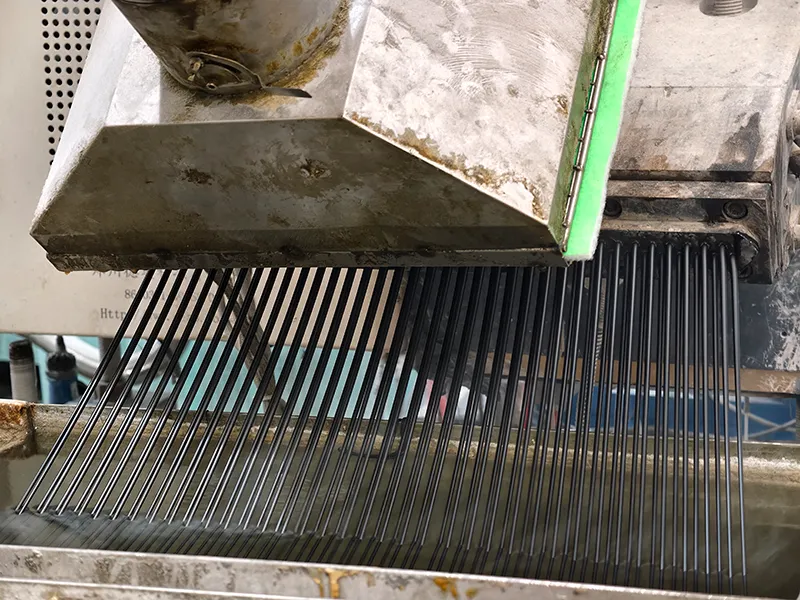
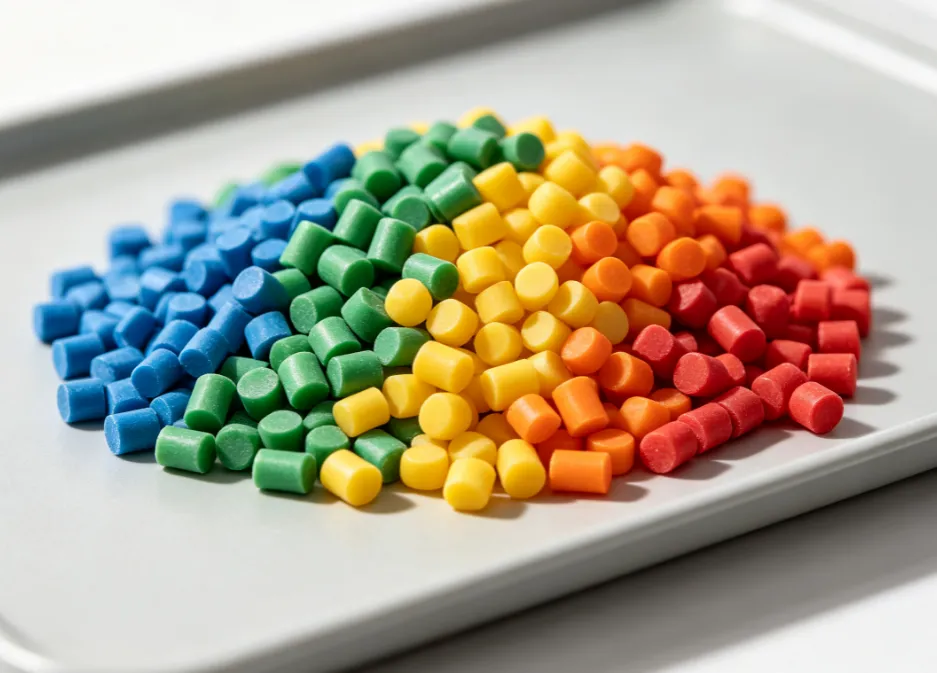
After mixing, the compounded melt is typically extruded, cooled, and pelletized into modified plastic pellets for downstream processing.
Simply put, dry blending focuses on mixing raw materials together, while polymer compounding goes further by achieving controlled dispersion and developing the required material properties.
Best Polymer Compounding Equipment Type
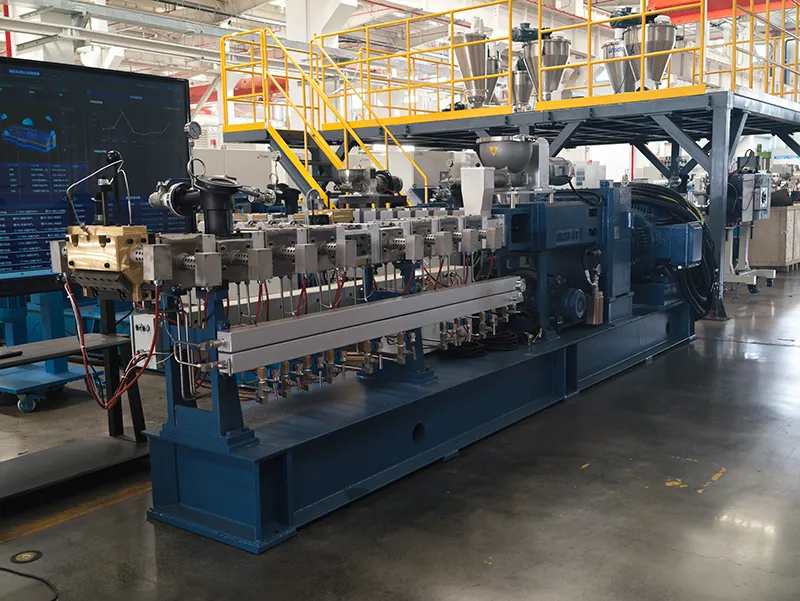
For most continuous industrial polymer compounding processes, the co-rotating intermeshing twin-screw extruder is generally the best polymer compounding equipment type. Its core processing section consists of two intermeshing screws rotating in the same direction. As materials travel through the barrel, they undergo conveying, melting, mixing, and dispersion, while feeding, venting, and devolatilization can also be integrated into the continuous process.


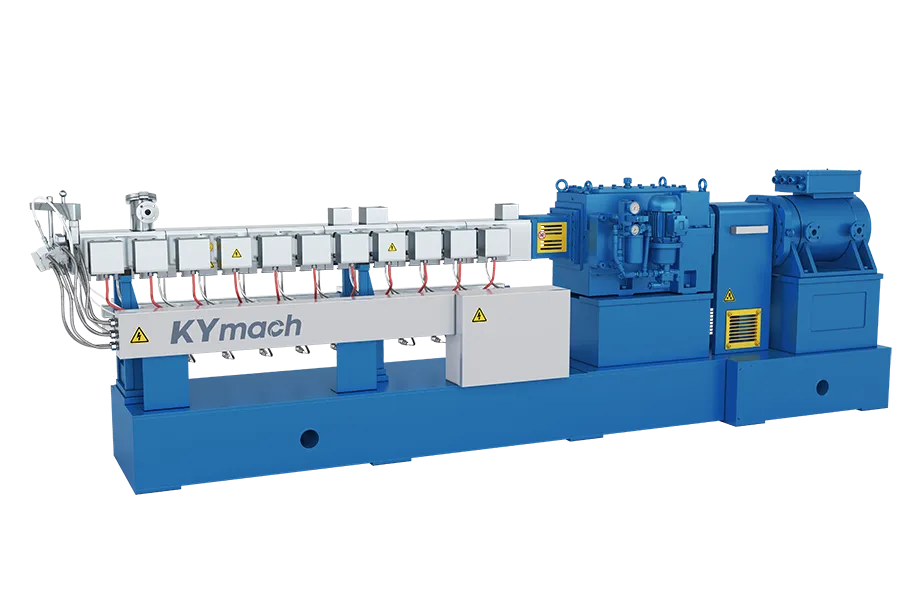
Co-rotating twin-screw extruders have become a primary choice for polymer compounding for several important reasons:
Intensive Mixing with Controlled Shear
Polymer compounding requires fillers, pigments, reinforcing materials, or other polymers to be thoroughly dispersed and uniformly distributed throughout the molten polymer matrix.
Co-rotating intermeshing twin-screw extruders provide strong distributive and dispersive mixing. The intermeshing screws generate shear, elongational flow, and kneading action, helping distribute the components while breaking down agglomerates of fillers and pigments.

Mixing and shear intensity can also be adjusted through screw speed and the configuration of conveying elements, kneading blocks, and other screw elements. This makes it possible to achieve sufficient dispersion while reducing the risk of polymer degradation or excessive fiber breakage.
Modular Design for Different Formulations
The screws and barrels of co-rotating twin-screw extruders typically feature a modular, building-block design. Screw shafts can be assembled with conveying elements, kneading blocks, and other functional elements, while barrel sections can be configured with main feeding ports, side feeders, liquid injection ports, atmospheric vents, and vacuum devolatilization ports.

By changing these configurations, manufacturers can adjust the L/D ratio, mixing intensity, feeding and venting positions, and the way different ingredients are introduced. This allows the same equipment platform to accommodate different polymers and formulations.
Suitable for Complex Formulations and Continuous Production
The intermeshing screw design also provides good self-wiping characteristics, reducing material stagnation on the screw surfaces and supporting stable continuous processing.
Flexible feeding and devolatilization configurations make it possible to handle complex multi-component formulations. For example:
- Mineral fillers and glass fibers can be introduced through side feeders.
- Liquid additives can be metered through dedicated liquid feeding systems.
- Moisture, solvents, and other volatile components can be removed through venting and vacuum systems.
In addition to physical compounding, a twin-screw extruder can also function as a continuous dynamic reactor for reactive extrusion processes such as grafting and chain extension, allowing mixing, reaction, and conveying to take place within a continuous process.
Wide Range of Polymer Compounding Applications
Co-rotating intermeshing twin-screw extruders are widely used for:
- Filled compounds
- Glass-fiber- and carbon-fiber-reinforced compounds

- Impact and flame-retardant modification
- Polymer blends and alloys

- Color and functional masterbatch

- TPE/TPR thermoplastic elastomers

- Wire and cable compounds
- Reactive extrusion
From conventional blending and high-filler formulations to fiber reinforcement and reactive modification, co-rotating intermeshing twin-screw extruders can meet a wide range of industrial polymer compounding requirements.
Polymer Compounding Process
A typical polymer compounding process consists of a series of coordinated steps, from formulation design and accurate feeding to melt mixing, devolatilization, extrusion, and pelletizing. Each stage affects the consistency and final performance of the compound.
Basic process: Formulation Design → Feeding & Dosing → Melting & Mixing → Degassing & Devolatilization → Extrusion & Pelletizing
1. Formulation Design
The process begins by selecting the base polymer, fillers, reinforcements, and functional additives and determining their proportions according to the required strength, toughness, flame retardancy, weather resistance, color, electrical properties, and processing performance. Material cost and processability must also be considered.
When a single resin cannot provide the required properties, two or more polymers can be blended. For example, PC and ABS can be compounded into a PC/ABS polymer alloy to balance heat resistance, impact performance, and processability.
2. Feeding & Dosing
Each component must be continuously and consistently fed into the compounding equipment according to the formulation. Pellets, powders, and liquid additives can be introduced through main feeders, side feeders, or liquid feeding systems depending on their characteristics.
Common dosing methods include:
- Volumetric feeding:Simple and relatively economical, suitable when very high dosing accuracy is not required.
- Gravimetric/Loss-in-Weight feeding:Controls feeding based on actual weight change, providing higher accuracy for formulations requiring greater consistency.

3. Melting & Mixing
Inside the extruder, the polymer gradually melts through barrel heating and mechanical energy and is mixed with additives, fillers, or other polymers. This is the core stage of the polymer compounding process.
Mixing involves two primary mechanisms:
- Distributive mixing:Distributes different components uniformly throughout the polymer melt.
- Dispersive mixing:Uses shear and elongational forces to break down agglomerates of fillers and pigments and disperse them within the matrix.
In continuous industrial compounding, this stage is commonly performed using a co-rotating intermeshing twin-screw extruder.

4. Degassing & Devolatilization
During compounding, moisture, residual solvents, residual monomers, and other low-molecular-weight volatile components may need to be removed through atmospheric venting or vacuum systems.

If these components remain in the melt, they can cause bubbles, silver streaks, surface defects, or reduced material performance in downstream products. This step is particularly important for hygroscopic polymers, formulations containing volatile components, and reactive extrusion processes.
5. Extrusion & Pelletizing
After mixing and devolatilization, the homogeneous polymer melt is extruded through a die, cooled, and pelletized into compound pellets.

A common method is strand pelletizing, in which the melt is extruded into strands, solidified by water or air cooling, and then cut into pellets. Depending on the material and production requirements, other pelletizing methods may also be used.
The finished modified plastic pellets can then undergo drying, screening, and packaging before being supplied for downstream processes such as injection molding, extrusion, and blow molding.
Key Factors in Polymer Compounding
Polymer compounding is influenced by equipment configuration, process parameters, and material properties, which together determine mixing quality, processing stability, and final compound performance.
1. Screw Configuration
The type and arrangement of conveying elements, kneading blocks, and mixing elements determine the shear and mixing intensity. Screw configurations can be adjusted to balance distributive and dispersive mixing for different polymers, fillers, and reinforcements.
2. Screw Speed and Throughput
Screw speed and feed rate affect shear, mechanical energy input, fill level, and residence time. Because co-rotating twin-screw extruders are typically starve-fed, these two parameters can be adjusted relatively independently to optimize mixing and throughput.
Visit to learn about the output calculation method: https://www.kyextruder.com/extruder-output-calculation-guide/
3. Temperature and Residence Time
Barrel and melt temperatures, together with residence time, determine the material’s thermal history. Insufficient heat or time can result in incomplete melting and mixing, while excessive exposure may cause polymer degradation or additive deterioration.
4. Feeding Accuracy and Location
Accurate feeding is essential for formulation consistency, while the point of addition affects each component’s exposure to shear and heat.
For example, glass fibers are commonly side-fed after the polymer has melted to reduce fiber breakage, while heat-sensitive or volatile additives may also be added downstream.
5. Material Properties and Compatibility
Melt viscosity, thermal stability, filler characteristics, and fiber properties all affect mixing and dispersion. For poorly compatible polymer blends, a compatibilizer can improve interfacial adhesion and dispersion stability.
6. Moisture and Volatile Control
Hygroscopic polymers such as PA, PET, PC, and TPU generally require proper drying. Excess moisture or residual volatiles can cause hydrolysis, bubbles, silver streaks, odor, and performance loss, making drying and effective venting/devolatilization important.
Finding the Right Balance
These factors interact, so stronger mixing does not always mean better results. In glass-fiber-reinforced compounds, for example, sufficient mixing improves fiber distribution, while excessive shear or residence time can cause fiber breakage.
The goal is to balance screw configuration, speed, throughput, temperature, residence time, and feeding strategy to achieve good dispersion without unnecessary material damage.
Common Types of Polymer Compounds
Depending on the target properties, polymer compounding can produce a wide variety of modified materials. Common types include filled, reinforced, flame-retardant, conductive/antistatic, and color or appearance compounds.
Filled Compounds
Filled compounds are produced by adding mineral fillers such as calcium carbonate or talc to polymers such as PP and PE to improve stiffness and dimensional stability while reducing material cost.
Typical examples include talc-filled PP for automotive interiors and appliances, and calcium-carbonate-filled PE for pipes and cable jackets. Filler dispersion and interfacial bonding with the resin are important processing considerations.
Reinforced Compounds
Glass fiber, carbon fiber, and other reinforcing materials are added to increase polymer strength, stiffness, and heat resistance.
Typical products include glass-fiber-reinforced PA for automotive and mechanical components and glass-fiber-reinforced PBT for connectors and other electrical components. Fiber dispersion and length retention must be controlled to avoid excessive fiber breakage during processing.
Flame-Retardant Compounds
Flame-retardant compounds incorporate flame retardants and synergistic systems to reduce flammability and achieve the required fire-performance level, such as applicable UL 94 V-0, V-1, or V-2 ratings.
Typical products include flame-retardant PC and flame-retardant wire and cable compounds. Formulation requires a balance between flame retardancy, mechanical properties, and processability.
Conductive & Antistatic Compounds
Conductive or antistatic properties can be introduced using carbon black, carbon nanotubes, metallic fillers, or antistatic agents. Depending on the formulation, these compounds can provide antistatic, conductive, or electromagnetic shielding performance.
Typical applications include antistatic trays, electronic packaging, handling containers, and conductive functional components. Performance largely depends on the loading level and dispersion of the conductive material within the polymer matrix.
Color & Appearance Compounds
Pigments, dyes, and masterbatches are used to control color and can also create special visual effects such as pearlescent or metallic finishes.
Typical applications include automotive interior and exterior components, household appliances, and consumer electronics housings. Important considerations include pigment dispersion, color consistency, thermal stability, and weather resistance.
Comparison of Common Polymer Compounds
| Modification Type | Main Purpose | Typical Materials | Typical Products / Applications |
| Filled | Improve stiffness and dimensional stability; reduce cost | Calcium carbonate, talc | Filled PP, filled PE |
| Reinforced | Improve strength, stiffness, and heat resistance | Glass fiber, carbon fiber | Glass-fiber-reinforced PA, PBT |
| Flame-Retardant | Improve flame-retardant performance | Flame retardants and synergists | Flame-retardant PC, cable compounds |
| Conductive / Antistatic | Modify electrical properties | Carbon black, carbon nanotubes, antistatic agents | Electronic packaging, conductive components |
| Color & Appearance | Control color and visual effects | Pigments, dyes, masterbatch | Automotive, appliance, and electronics housings |
About KYmach
KYmach is a manufacturer specializing in twin-screw extruders and complete polymer compounding and pelletizing systems, with more than 30 years of experience in twin-screw extrusion technology. In addition to individual machines, KYmach provides complete production-line solutions covering raw material storage, drying, conveying, dosing, mixing, compounding, pelletizing, and packaging.
KYmach equipment and systems are used for engineering plastic modification, filled and reinforced compounds, polymer alloys, masterbatch, wire and cable compounds, thermoplastic elastomers, biodegradable plastics, recycled plastics, and polymer devolatilization. Equipment and auxiliary systems can be configured according to the material system, formulation, required throughput, and processing conditions.
If you are looking for a polymer compounding machine or complete compounding and pelletizing line, KYmach can provide equipment selection and process solutions based on your materials, formulation, and production requirements.