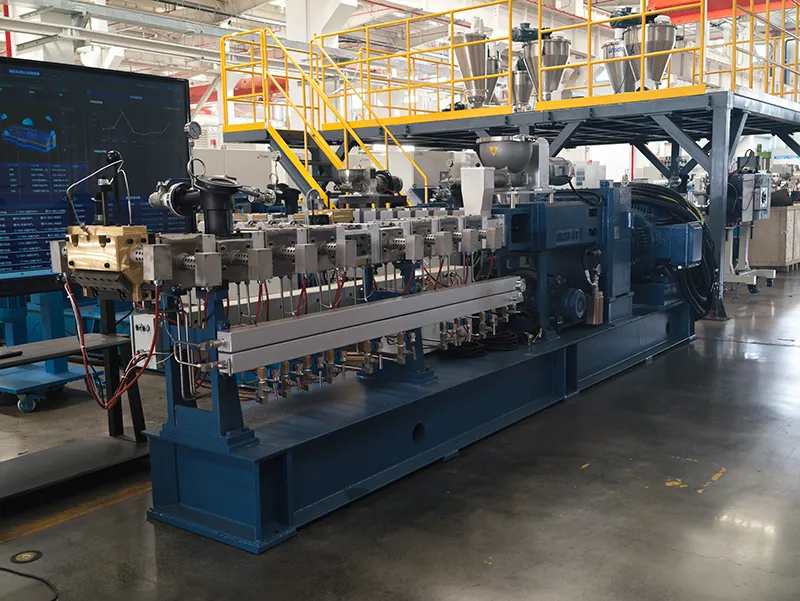
KYmach twin-screw extruders are used as continuous polymerization reactors, enabling efficient, controlled polymer reactions with precise temperature control, uniform mixing, and scalable production. Ideal for TPU and other specialty polymers.
Overview of Polymerization Using Twin-Screw Extruders
Twin-screw extruders are widely applied as continuous polymerization reactors. Monomers, initiators, and catalysts are fed into the extruder, where heating, melting, mixing, reaction, and devolatilization occur to achieve the desired polymerization.
Compared to traditional batch reactors, twin-screw extruder polymerization offers significant advantages:
- Continuous Process: Shorter reaction time and higher production efficiency.
- Uniform Heating and Mixing: Enables consistent polymer properties throughout the material.
- Enhanced Heat Transfer: Reduced risk of runaway reactions, multi-point feeding possible, and wider process window.
- Precise Process Control: Modular screw design with multiple independently controlled temperature zones allows accurate control over polymer morphology and reaction outcome.
Applications
- Continuous polymerization of thermoplastic polyurethane (TPU)
- Specialty polymers requiring precise reaction control
- High-performance materials for automotive, electronics, and industrial applications
Process solution-Polymerization Process Flow
1. Material Addition
Raw materials, catalysts, and initiators are accurately metered and fed into the twin-screw extruder. Multi-point feeding allows complex formulations to be handled efficiently.
2. Reaction Extrusion
Within the extruder, polymers are melted, mixed, and chemically reacted under controlled temperature and shear conditions. Devolatilization enables removal of residual monomers or byproducts.
3. Pelletizing or Downstream Integration
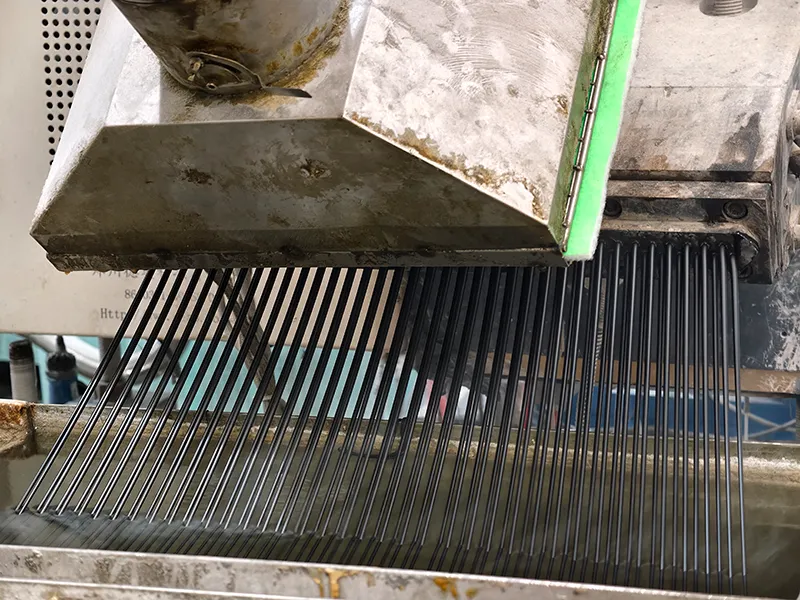
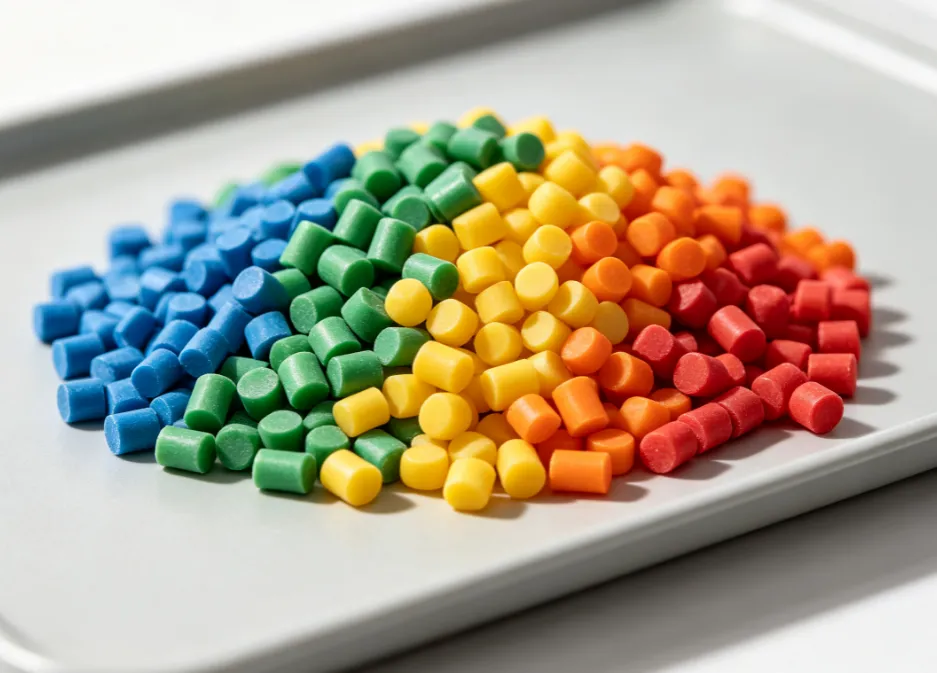
The polymer melt is either pelletized using a water-cooled or underwater pelletizer or sent directly to downstream processing equipment.
Material feeding ➡ Reaction extrusion ➡ Pelletizing or direct transfer to downstream equipment.
Equipment options
| Model | Screw Diameter(mm) | Max. screw speed(rpm) | L/D | Motor Power (KW) | Throughput(kg/h) |
| HKV54 | 54 | 150–300 | 68 | 22–45 | 100–200 |
| HKV77 | 77 | 150–300 | 68 | 55–110 | 300–500 |
| HKV100 | 100 | 150–300 | 68 | 90–200 | 600–1000 |
| HKV140 | 140 | 150–300 | 68 | 250–450 | 1500–2500 |
| HKV189 | 189 | 150–300 | 68 | 450–900 | 3000–4500 |
Note: Motor power may vary depending on process and material requirements.
Why Use KYmach Twin-Screw Extruders for Polymerization?
- Continuous operation for higher efficiency compared to batch reactors
- Modular screw design for precise temperature and reaction control
- Excellent mixing and heat transfer for uniform polymer quality
- Flexible multi-point feeding for complex formulations
- Scalable production capacity from 100 kg/h to over 4,000 kg/h