Overview
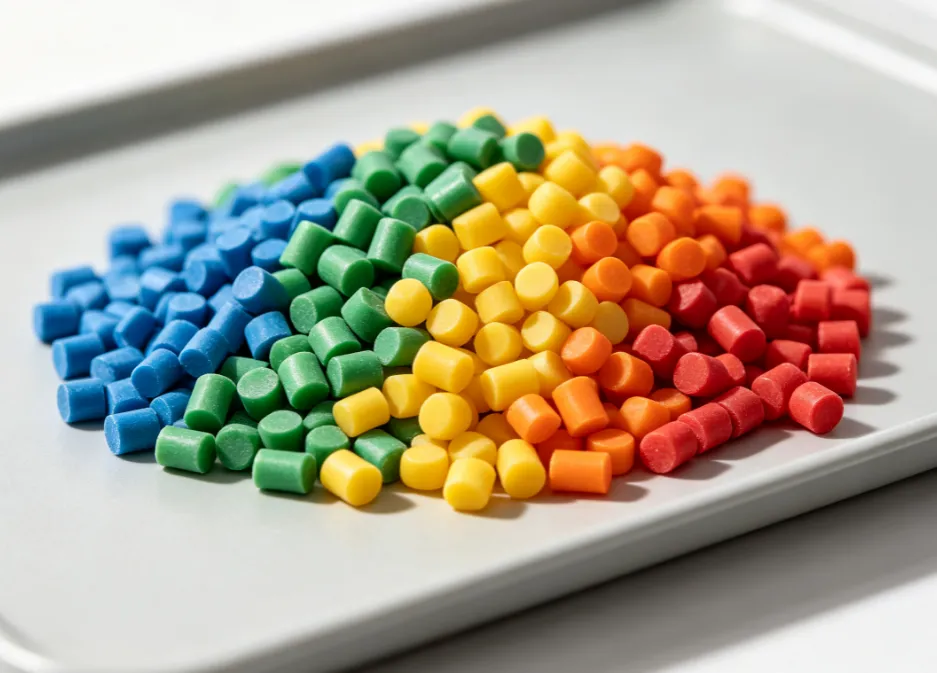
Masterbatch is a concentrated blend of pigments or functional additives dispersed in a polymer carrier. By adding a small percentage of masterbatch during processing, manufacturers can easily achieve the desired color or material properties without handling multiple additives separately.
Applications
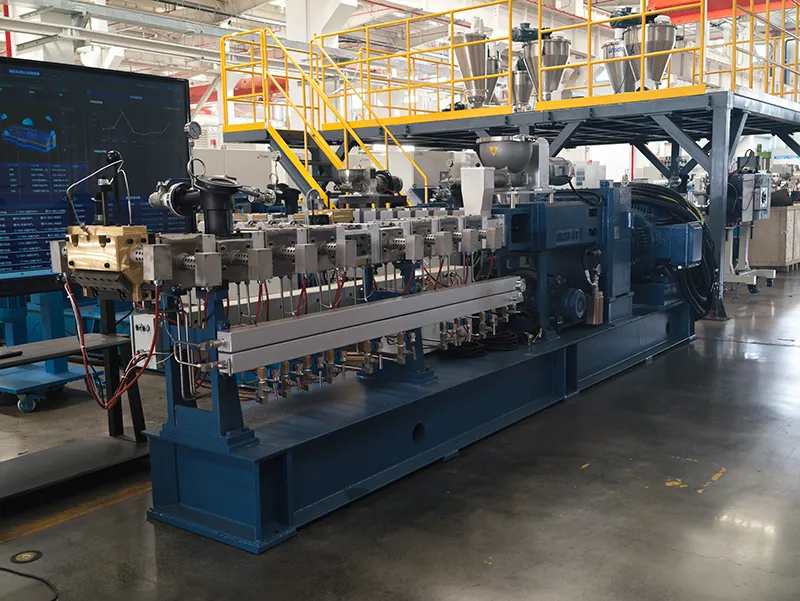
Masterbatch is widely used in plastic manufacturing worldwide. Typical applications include film production, cables, pipes, packaging materials, and engineering plastic products. High-performance twin screw extruders are commonly used for masterbatch production because they provide strong mixing capability, precise temperature control, and stable throughput. KYmach twin screw extrusion systems are designed to support a wide range of masterbatch compounding applications for global customers.
Types of Masterbatch
1.Color Masterbatch
Color masterbatch is produced by dispersing pigments uniformly into a polymer carrier resin. Pigment concentration depends on the type of pigment and its surface characteristics. Typical pigment loading levels include:
- Organic pigments: 20%–40%
- Inorganic pigments: 50%–80%
Uniform dispersion is critical to achieve consistent color quality and avoid pigment agglomeration during downstream processing. Color masterbatch is widely used in:
- Plastic films
- Wire and cable insulation
- Plastic sheets and profiles
- Pipes and tubing
- Synthetic fibers
- Engineering plastics
Twin screw extrusion provides strong dispersive mixing, enabling uniform pigment dispersion throughout the polymer matrix
2.Functional Masterbatch
Functional masterbatch contains additives that modify the performance of plastic products. Typical functional masterbatch types include:
- Pearl masterbatch
- Metallic pigment masterbatch (automotive and appliance applications)
- Anti-static masterbatch (packaging films)
- Anti-fog masterbatch (agricultural films)
- Antibacterial masterbatch (medical and consumer products)
- Agricultural film additive masterbatch
These masterbatches enhance plastic performance while maintaining efficient processing during extrusion or molding.
3.Flame Retardant Masterbatch
Many plastics require flame retardant additives to meet fire safety standards. Flame retardant masterbatch improves fire resistance by dispersing flame retardant additives into a polymer carrier.
This type of masterbatch is widely used in industries requiring high safety standards, including:
- Electronics
- Construction materials
- Automotive components
- Aerospace and transportation systems
Efficient dispersion of flame retardant additives is essential to achieve reliable fire performance without significantly affecting mechanical properties.
4.Filler Masterbatch
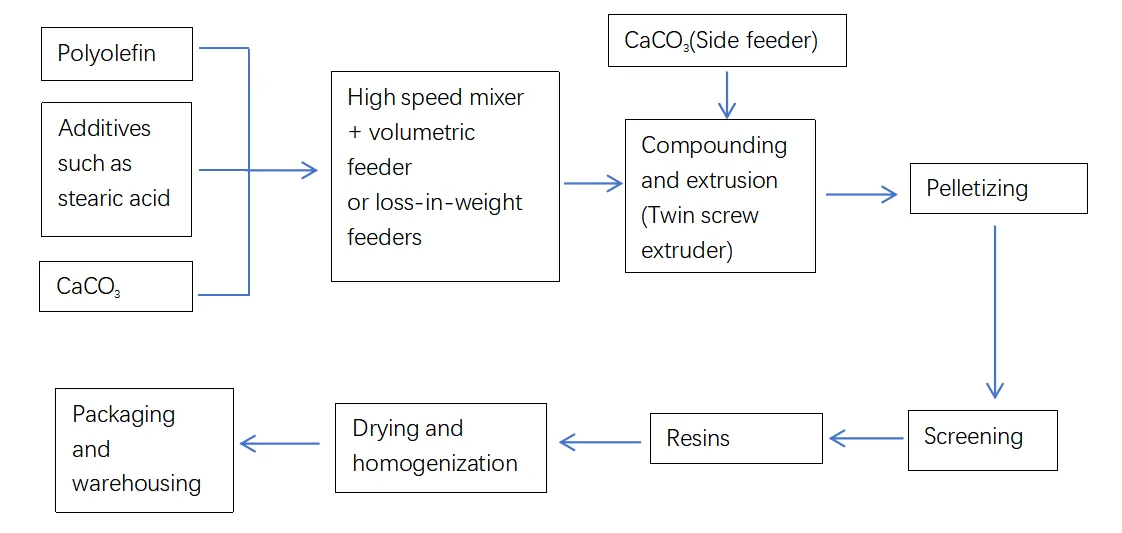
Polyolefin filler masterbatch typically consists of:
- Carrier resin
- Mineral fillers (commonly calcium carbonate)
- Processing additives
The carrier resin content is generally 10%–25% and must be compatible with the filler to enable stable processing and good dispersion.
Filler masterbatch is widely used in:
- Plastic films
- Breathable films
- Shopping bags
- Hollow products
- Pipes and sheets
- Injection molded products
- Disposable food containers
By incorporating mineral fillers, filler masterbatch can improve product stiffness, enhance dimensional stability, and significantly reduce material costs.
Process soluation-Twin Screw Extrusion Process for Masterbatch
Masterbatch production requires efficient dispersion of pigments or additives within the polymer matrix. This is achieved through controlled melting, mixing, and compounding inside a co-rotating twin screw extruder.
A typical masterbatch compounding line includes:
- Main material feeding system
- Side feeder for pigments or fillers
- Twin screw extruder for melt mixing
- Vacuum degassing system
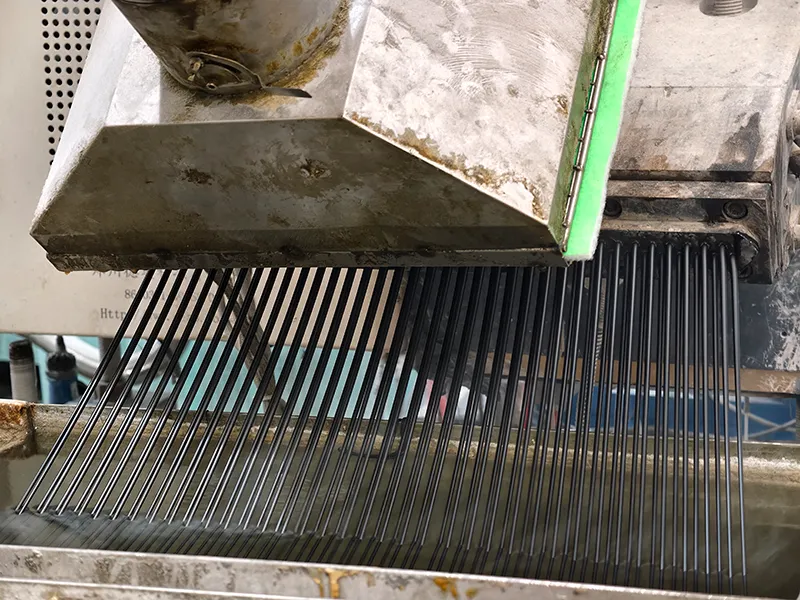
- Pelletizing system
Proper screw configuration enables excellent distributive and dispersive mixing, which is essential for producing high-quality masterbatch pellets.
KYmach Twin Screw Extruder Solutions
KYmach twin screw extruders are designed for high-performance masterbatch compounding.
Equipment Options
| Model | Screw Diameter | Max Speed | L/D | Motor Power | Throughput |
| SK63 | 63 mm | 900 rpm | up to 52 | 250 kW | 500–900 kg/h |
| HK73 | 73 mm | 600 rpm | up to 52 | 315 kW | 700–1200 kg/h |
| SK73 | 73 mm | 900 rpm | up to 52 | 400 kW | 900–1800 kg/h |
These extrusion systems provide:
- Excellent pigment and filler dispersion
- Stable production throughput
- Precise temperature control
- Reliable long-term operation
They are widely used in masterbatch manufacturing plants around the world.
Customer cases
| Customer Type | Location | Application | KYmach Equipment Supplied | Project Description |
| Film Material Manufacturer | Foshan, China | Film materials for baby hygiene products, medical materials, and protective products | 3 × SK73 twin screw extrusion lines 1 × HK73 twin screw extrusion line | Used for compounding high-performance film materials with stable dispersion and consistent production output. |
| Polyolefin Color Masterbatch Producer | Jiangsu, China | Polyolefin color masterbatch production | 30+ HK series twin screw extrusion lines | Large-scale masterbatch manufacturing with stable throughput and reliable pigment dispersion. |
Why Choose KYmach Twin Screw Extruders?
- Consistent dispersion of pigments and additives
- Stable throughput and processing performance
- Proven reliability in global production lines
- Suitable for color, functional, filler, and flame retardant masterbatch
KYmach twin screw extruders provide reliable solutions for masterbatch production, offering controlled dispersion, stable output, and flexible pelletizing options for manufacturers worldwide.