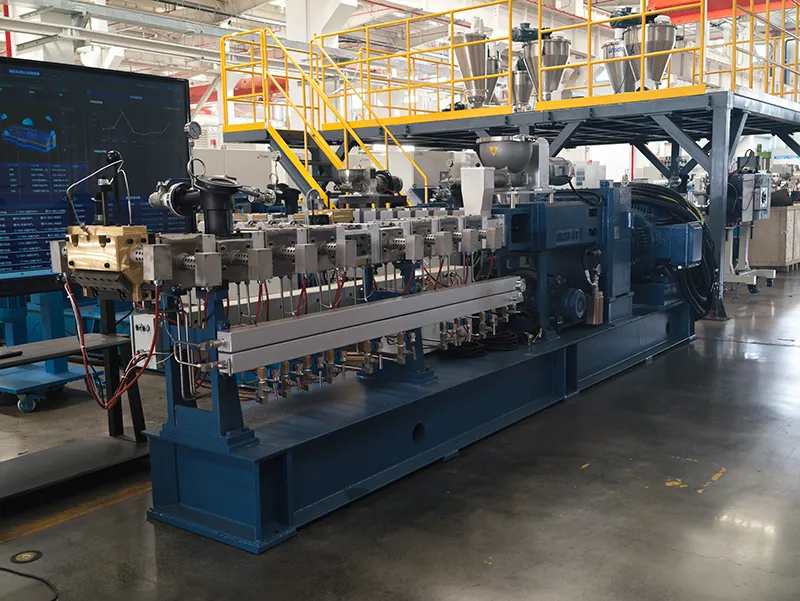
KYmach twin-screw extrusion lines produce high-performance thermoplastic elastomers, including TPU, TPE, and TPV. Our solutions enable precise formulation, efficient compounding, and high-quality pellet production for automotive, industrial, and consumer applications.
Overview of Thermoplastic Elastomers
Thermoplastic elastomers (TPEs) combine the high elasticity, oil and aging resistance of traditional vulcanized rubber with the processability of thermoplastics.
TPEs are classified based on their production method:
1.Chemically synthesized TPEs: Chemically synthesized TPEs include block copolymers, graft copolymers, and ionomers and include main-chain copolymers, graft copolymers, and ionomers.
2.Rubber-plastic blends (TPVs & TPE-IPN): Rubber and thermoplastic resins are blended, forming either dynamically vulcanized TPVs or interpenetrating polymer networks (TPE-IPN).
TPE production involves feeding raw materials and additives into a twin-screw extruder for precise metering, melting, compounding, extrusion, and pelletizing.
Applications
Thermoplastic Polyurethane (TPU)
Used for high-performance elastomeric products requiring flexibility, abrasion resistance, and chemical resistance.
Thermoplastic Elastomer (TPE)
Rubber-plastic blends suitable for automotive seals, industrial parts, and consumer products.
Thermoplastic Vulcanizate (TPV)
Dynamically vulcanized elastomers for applications requiring high elasticity and heat resistance.
Pocess solution-TPE/TPU Production Process
Upstream Liquid Metering & Mixing
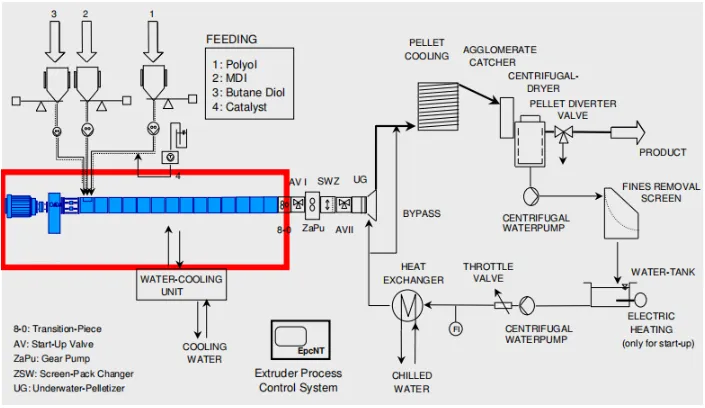
TPU production uses a five-component liquid metering system:
- Polyol (POLYOL1/B)
- MDI (Diphenylmethane Diisocyanate, A1)
- HDI (Hexamethylene Diisocyanate, A2)
- Chain Extender (BDO/C1)
- Additives (C2)
Each component is controlled by a servo-driven dosing pump with flow meters, enabling precise ratios and adjustable mixing indices.
Twin-Screw Extrusion & Compounding
- Melt, mix, and homogenize components in a SK73 co-rotating twin-screw extruder
- Temperature range: 140–250°C
- Screw speed: 200–300 rpm
- Die pressure: 4–7 MPa
Downstream Pelletizing
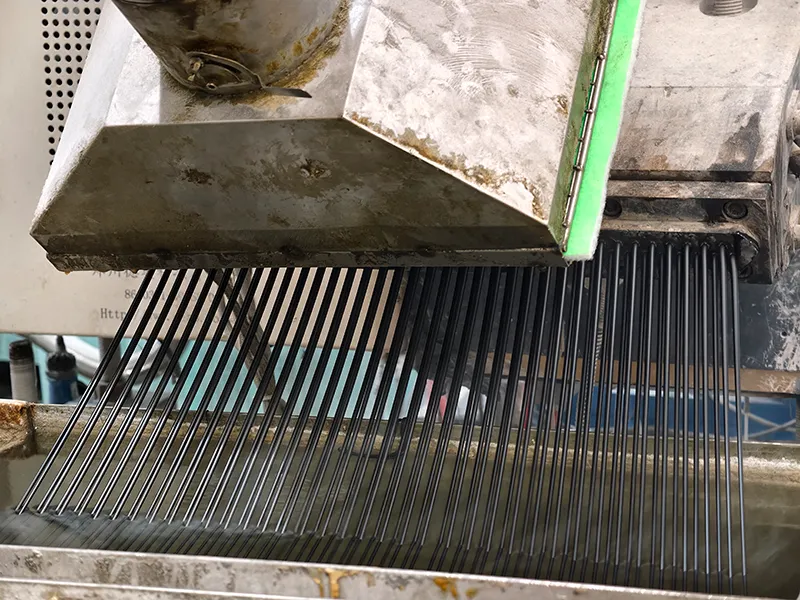
- Extrudate passes through a strand die and underwater pelletizer
- Includes screen changers, start-up valves, underwater cutting, centrifugal drying
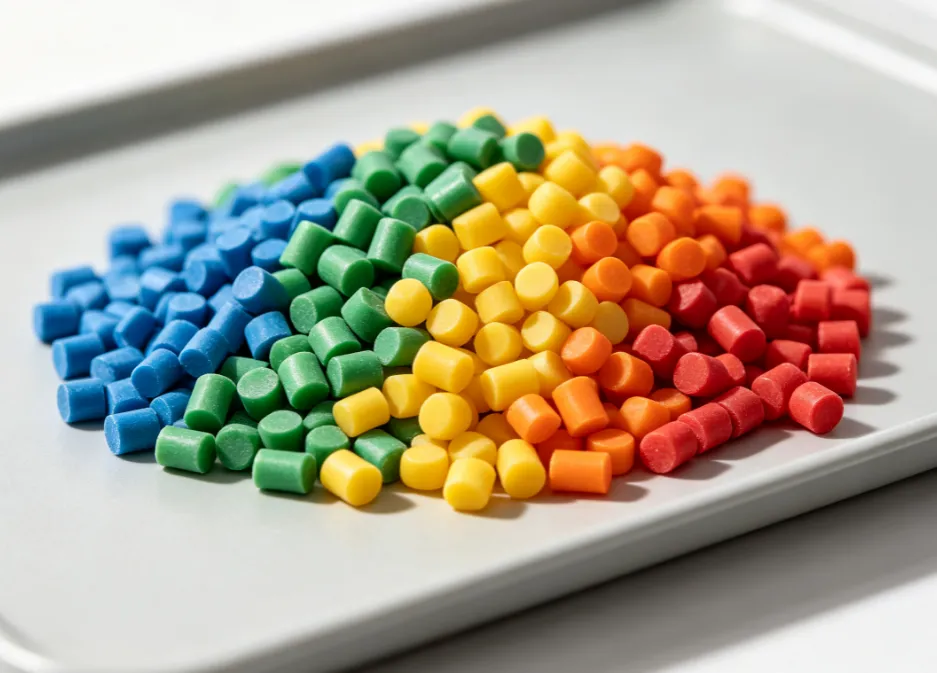
- Pellets are cooled, dried, and ready for packaging
Equipment options
| Model | Temperature | Die Pressure | Screw Speed | Output |
| SK73 Twin-Screw | 140–250°C | 4–7 MPa | 200–300 rpm | 400–500 kg/h |
Customer Case
Zhejiang Lock New Materials
Annual TPU pellet production: 3,000 tons.
Equipment: SK73 twin-screw extruder, five-component liquid metering system, domestic underwater pelletizing line. Output: 400–500 kg/h.
Why Choose KYmach for TPE/TPU/TPV Production?
- Accurate liquid and solid metering for precise formulations
- High-shear twin-screw extrusion for uniform compounding
- Integrated underwater pelletizing for high-quality pellets
- Scalable solutions for automotive, industrial, and consumer elastomeric products
Reliable process control, minimal downtime, and global service support